January has a way of slowing us down. Roads glaze over, snow piles up along the shoulders, and even short drives demand a little extra patience. It’s a good reminder that winter travel has always required preparation—and on early roads like the Lincoln Highway, it was nothing short of an adventure.
Long before snowplows, salt trucks, or heated windshields, motorists faced winter conditions head-on with grit, ingenuity, and a lot of layers.
Roads Never Meant for Snow
When the Lincoln Highway was dedicated in 1913, it stitched together existing roads—many of them dirt, gravel, or stone. These routes were designed primarily for fair-weather travel, yet they were used year-round by necessity.
In winter, snow filled ruts, ice coated hills, and poor drainage turned stretches of roadway into frozen obstacles. A storm could make a section impassable for days. Drivers learned quickly that winter travel wasn’t just about distance—it was about timing, terrain, and luck.
Cars That Didn’t Love the Cold
Early automobiles were marvels of engineering for their time, but winter was not their friend. Engines were difficult to start in the cold. Oil thickened. Radiators risked cracking if water froze. There were no heaters, no defrosters, and no power steering to muscle through slick conditions.
Windshields iced over easily, requiring frequent stops to scrape them clear by hand. Motorists improvised—cardboard over radiators to retain heat, blankets wrapped around engines, chains fitted onto tires for traction. Winter driving was hands-on in every sense of the word.
Dressing for Survival, Not Comfort
A winter road trip meant dressing for exposure. Drivers and passengers wore heavy coats, scarves, gloves, goggles, and dusters that doubled as protection against cold winds and flying ice. Vehicles were often open or only partially enclosed, leaving travelers at the mercy of the elements.
Packing for a trip meant thinking like a survivalist: extra fuel, tools, food, blankets, and shovels were common companions. A breakdown in winter wasn’t just inconvenient—it could be dangerous.
Filling Stations as Lifelines
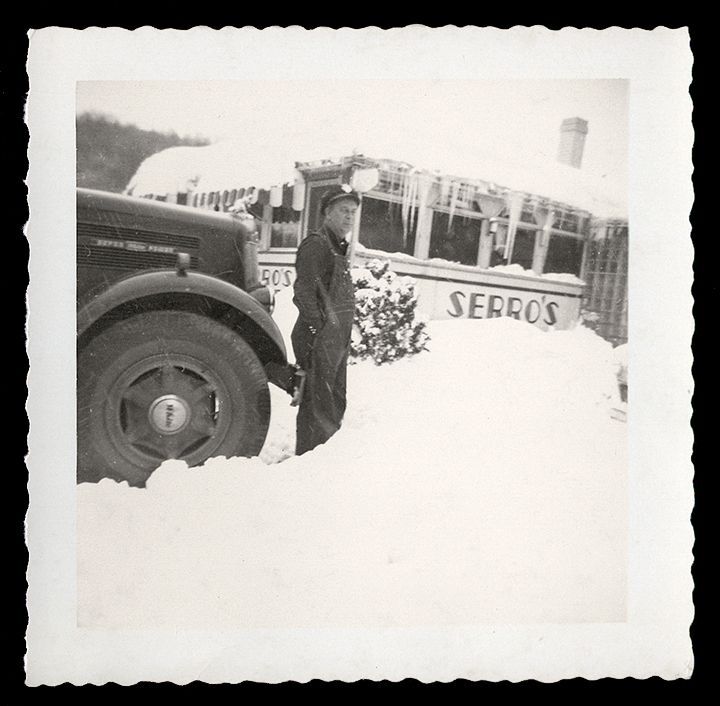
In winter, roadside stops became essential. Filling stations, garages, and small businesses along the Lincoln Highway offered more than fuel—they offered warmth, mechanical help, and local knowledge.
Hilltops and difficult grades were especially important places to stop. Before attempting a steep climb, drivers often sought advice from station attendants who knew the road’s condition that day. These stops functioned as informal information hubs, helping travelers decide whether to press on or wait out the weather.
The Infamy of Winter Hills
Steep hills were among the most feared obstacles of winter travel. Snow and ice could send cars sliding backward or leave them stranded halfway up a grade. In some cases, passengers would disembark to lighten the load. Others walked ahead to scout conditions or waited for assistance.
Places like Jacktown Hill earned reputations not just for their elevation, but for how unpredictable they became once winter set in. What was manageable in summer could be treacherous—or impassable—by January.
Why Winter Travel Still Happened
Despite the risks, people kept moving. Farmers hauled goods, salesmen kept routes, families traveled for holidays, and supplies had to get through. The Lincoln Highway wasn’t just a scenic route—it was a vital connector between communities, even in the coldest months.
Winter revealed the highway’s true importance. It tested both the road and the people who relied on it, proving that travel wasn’t always about speed or convenience—it was about determination.
Small Objects, Big Stories
That’s why something as simple as an ice scraper can tell a powerful story. It represents the everyday reality of early motorists—clearing windshields by hand, stopping frequently, adapting constantly. It speaks to a time when winter travel demanded patience, preparation, and a willingness to face the road as it was.
As we navigate snowy roads today, with all the comforts of modern travel, it’s worth pausing to remember those early drivers who paved the way—one cold mile at a time.


